
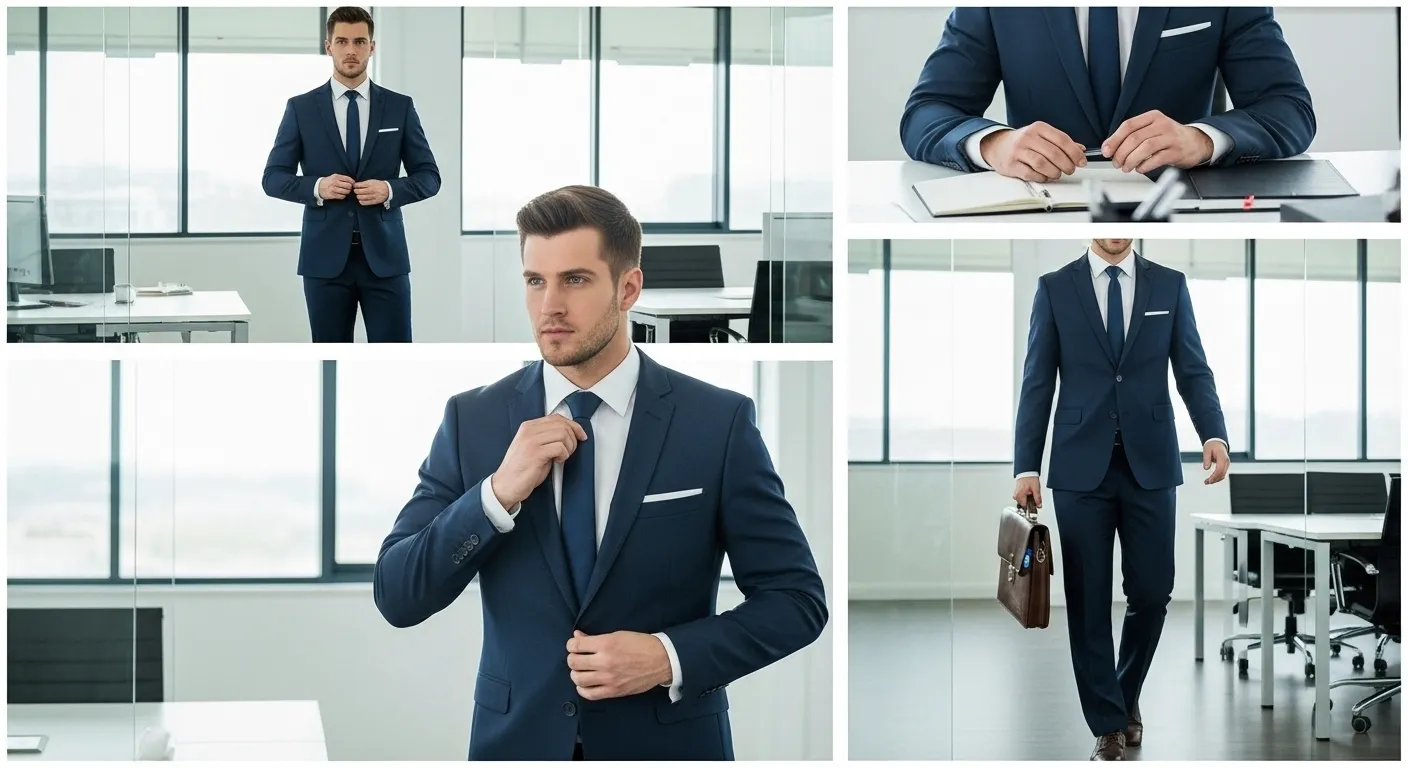
Business Formal Outfit for Men: Look Sharp, Feel Confident
A Business Formal Outfit for Men is more than just a suit—it’s a symbol of confidence, respect, and professionalism. In today’s world, where first impressions matter more than ever, dressing the right way can set the tone for success. Whether it’s a job interview, client meeting, or corporate event, your outfit silently communicates how serious and capable you are.
What makes business formal style stand out is how it balances professionalism, elegance, and personal taste. A well-tailored suit, polished shoes, and subtle accessories can express refinement without shouting for attention. When you’re dressed sharply, you not only look confident—you feel confident too.
Understanding Business Formal Dress Code
What Counts as Business Formal
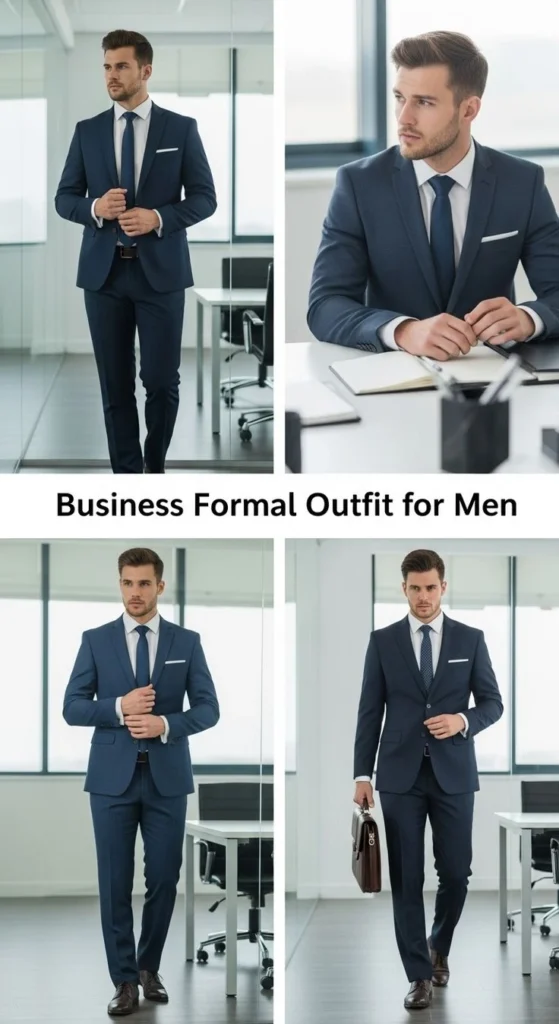
Business formal attire is the most polished version of office wear. It’s what you wear to high-stakes meetings, professional conferences, and formal corporate events. Typically, it includes a full suit, dress shirt, tie, leather shoes, and minimal accessories.
It’s different from business casual or semi-formal dress codes. For example, business casual might include chinos and a blazer without a tie, while semi-formal can allow a bit of creativity with colors and fabrics. Business formal, however, leaves little room for experiment—it’s about structure, precision, and respect for tradition.
The Role of Fit and Fabric
The fit of your outfit defines how professional you appear. A tailored suit always beats one that’s too loose or too tight. It should hug your shoulders comfortably and fall cleanly without wrinkles or pulling.
Fabric also plays a big role. Wool is the classic choice—it’s durable and drapes well. For warmer climates, lightweight options like cotton blends or linen can help you stay cool while still looking sharp. A personal tip: always invest in breathable fabric; comfort enhances confidence.
Essential Elements of a Business Formal Outfit
The Suit
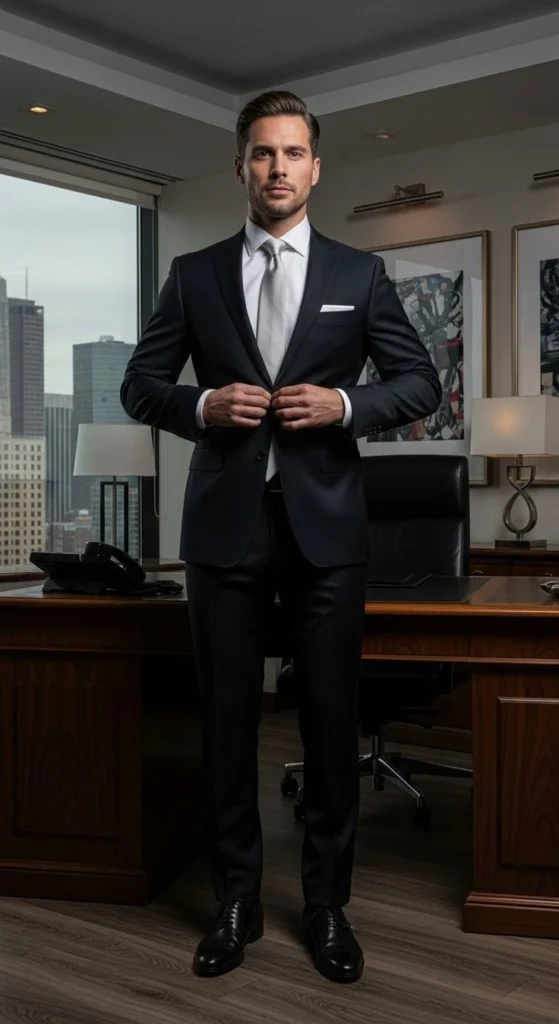
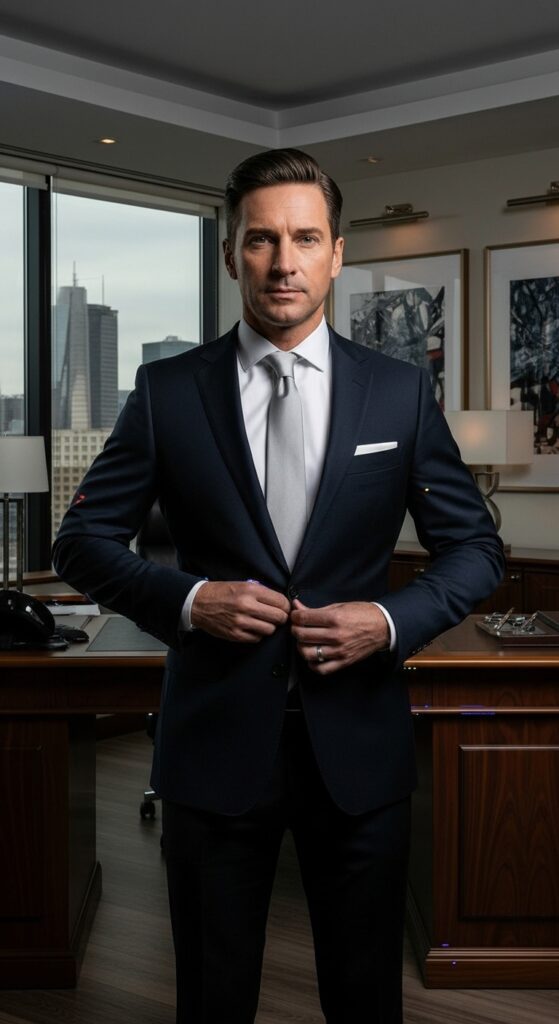
Your suit is the centerpiece of your entire look. A single-breasted suit is the most versatile option and ideal for most business settings. A double-breasted suit, on the other hand, gives off a more powerful and formal impression but works best for established professionals or special occasions.
Stick to classic colors like navy, charcoal gray, or black—they project authority without being flashy. When buying a suit, check the shoulder fit and sleeve length. The jacket should rest neatly on your shoulders and end just around your wrist bone. A well-fitted suit feels like armor—it gives you quiet confidence throughout the day.
The Dress Shirt
A crisp, clean shirt sets the tone for the whole outfit. White and light blue are timeless choices that pair well with almost any suit color. For collars, a spread collar looks modern, while a point collar keeps things traditional. French cuffs add sophistication but are optional for daily office wear.
Always iron your shirts before wearing them. Wrinkles can ruin an otherwise polished look. Choose shirts made from high-quality cotton for better comfort and breathability. I’ve learned that a good shirt not only feels great but also makes your jacket look sharper.
The Tie
Your tie adds personality to your outfit. Go for colors and patterns that complement your suit rather than compete with it. A navy tie with small dots or subtle stripes works perfectly with a gray suit.
The tie’s length should reach the middle of your belt buckle—too short or too long looks careless. The Windsor or Half-Windsor knot gives a clean, balanced look. If you want to keep it simple, a neatly tied knot and a well-chosen color are enough to make an impression.
The Shoes
Your shoes are often the first thing people notice. Stick to Oxford or Derby shoes for a classic formal touch. Black shoes pair well with navy, gray, or black suits, while brown shoes can be worn with lighter shades like blue or tan.
Keep them polished and clean—nothing ruins a formal look faster than dull, scuffed shoes. A small personal tip: use wooden shoe trees; they help maintain the shape and absorb moisture.
Accessories That Complete the Look
Accessories should enhance your outfit, not overpower it. A sleek leather belt that matches your shoes, a simple watch, and a pair of cufflinks can elevate your entire appearance. A pocket square adds a refined touch if done tastefully.
Remember, minimalism is key. You don’t need to wear everything at once. Sometimes, a single well-chosen detail—a classic watch or a clean white pocket square—is enough to show your sense of style.
Grooming and Presentation
Hair and Beard
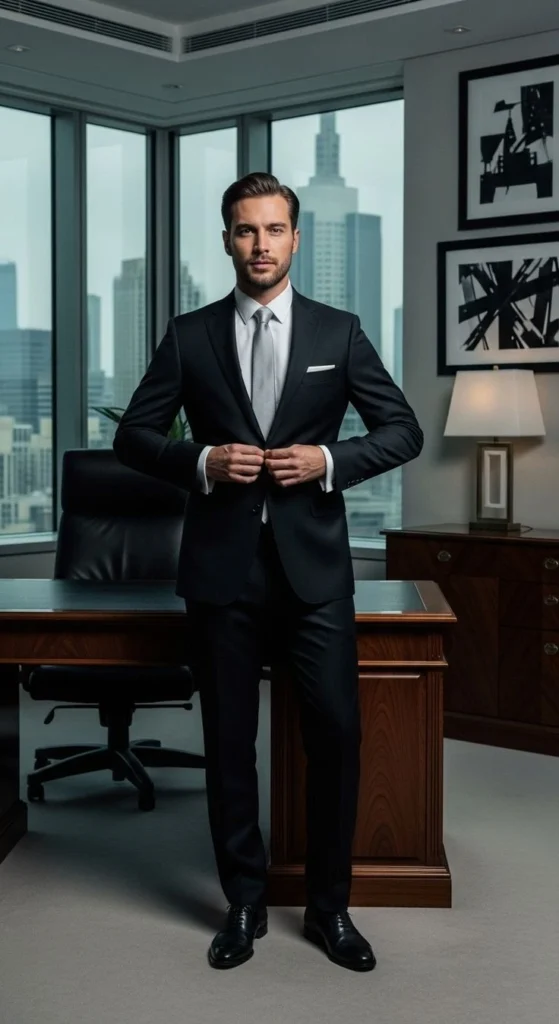
When it comes to a Business Formal Outfit for Men, grooming plays a big role in completing the look. Your hairstyle should be clean, neat, and well-kept. A classic side part, short fade, or slick back works perfectly for formal occasions. Avoid messy or overly styled hair—simplicity always looks more professional.
For facial hair, both a well-groomed beard or a clean shave can look sharp. The key is maintenance. If you keep a beard, trim it regularly and shape the edges neatly. A clean shave, on the other hand, gives a crisp, fresh impression that pairs beautifully with a tailored suit.
Fragrance and Hygiene
Subtle fragrance goes a long way. A light cologne with woody or citrus notes keeps you smelling fresh without overwhelming others. Think of fragrance as a quiet confidence booster rather than a loud statement.
Good hygiene is non-negotiable. Keep your nails trimmed, your breath fresh, and your clothes clean. These small details show self-respect and attention to detail—qualities people notice instantly in professional settings.
Seasonal Business Formal Styling
Summer Business Formal
Dressing formally in summer can be tricky, but it’s all about smart fabric choices. Go for lightweight suits made of linen or cotton. These materials breathe better and help you stay cool during long workdays.
Choose lighter shades like beige, light gray, or soft blue to reflect heat while keeping things stylish. Pair your suit with a breathable cotton shirt and loafers or dress shoes in lighter tones. Personally, I prefer swapping a silk tie for a cotton one—it feels much more comfortable in warm weather.
Winter Business Formal
Winter brings the chance to add layers without losing polish. A wool or tweed suit, a tailored vest, and a structured overcoat make for the perfect combination of warmth and sophistication.
Stick to darker tones such as navy, charcoal, or deep brown—they project authority and suit the season’s mood. Adding a scarf or gloves in matching tones can also elevate your look without breaking the business-formal code.
Common Mistakes to Avoid
Even the best suit can look sloppy if small details are ignored. Avoid mismatched colors or clashing accessories—everything from your tie to your belt should feel coordinated.
Another common mistake is ignoring fit and proportions. Oversized suits or tight shirts can make you look careless. Visit a tailor if needed; the difference a proper fit makes is incredible.
Avoid over-accessorizing or wearing anything too flashy. A good rule of thumb: if it distracts from your face, it’s probably too much. And never wear wrinkled shirts or scuffed shoes—they instantly ruin a formal impression.
Building a Versatile Business Wardrobe
Start with the Basics
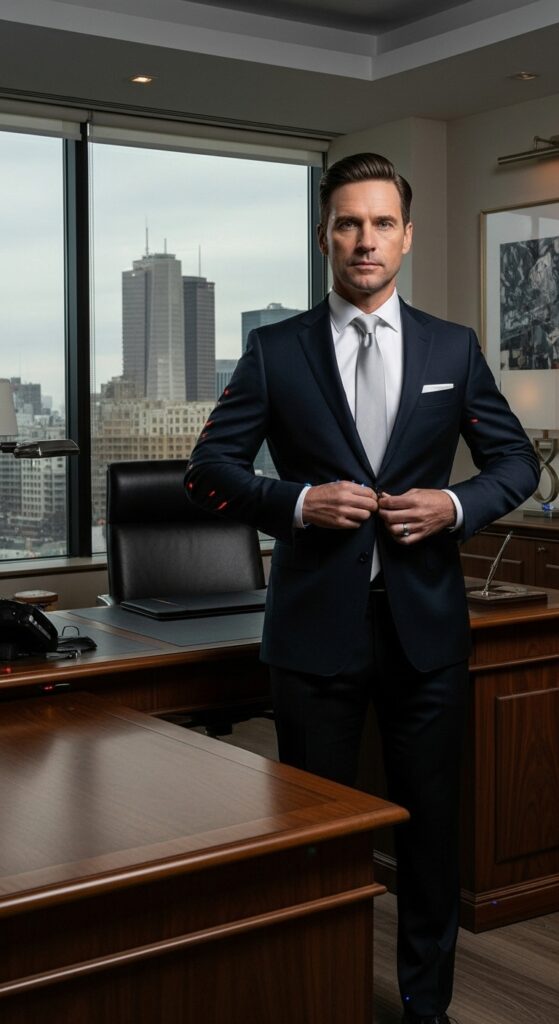
Start small and build your wardrobe over time. A navy suit, white shirt, and black Oxford shoes form the perfect foundation. These pieces can handle any business setting and easily mix with new additions later.
Once you have the basics, expand with gray or charcoal suits, a few patterned ties, and shirts in soft pastels. Investing in quality over quantity ensures your outfits last longer and always look refined.
Mix and Match Smartly
A smart approach is to rotate shirts, ties, and accessories to create new combinations. A navy suit can look completely different when paired with a striped tie one day and a solid-colored one the next.
This mix-and-match method keeps your look fresh without needing a closet full of suits. It’s also a budget-friendly way to maintain variety while staying formal.
The Confidence Factor
Dressing well doesn’t just change how others see you—it changes how you see yourself. When you wear a sharp business formal outfit, your posture improves, your speech becomes clearer, and your energy shifts. You naturally project confidence.
Think about job interviews or big presentations—when you walk in looking your best, people take notice. I’ve experienced it myself: when you look like a professional, you start to act like one too.
A simple personal tip: “When you look the part, you perform like it too.” Confidence is your most powerful accessory.
The Bottom Line
A Business Formal Outfit for Men is timeless because it combines class, structure, and self-assurance. It’s not about chasing trends but mastering the basics—fit, fabric, and grooming.
Whether it’s summer or winter, boardroom or event, the right outfit can help you command respect and feel in control. Remember, your confidence and composure are the finishing touches that complete any formal look.