

Business Casual Outfit for Men: A Simple Guide to Looking Sharp Every Day
Finding the right business casual outfit for men can be tricky. You don’t want to look too formal, but you also don’t want to seem underdressed. The key is balance — clothes that look polished but still feel comfortable.
This guide will help you understand what business casual really means, what pieces every man should own, and how to put together simple, stylish looks that work for your daily routine.
What “Business Casual” Really Means

Business casual sits right between formal and casual wear. It’s not a suit-and-tie situation, but it’s also not jeans and a t-shirt. Think of it as your “smart comfort zone.”
If you had to picture it, a button-down shirt, chinos, and loafers would fit perfectly. You look neat enough for meetings but still relaxed enough for coffee breaks.
Here’s a quick way to understand it:
- Formal: Suit, tie, and dress shoes
- Business Casual: Smart shirt, chinos, loafers
- Casual: T-shirt and jeans
Your goal is to look put-together without feeling restricted.
The Key Pieces Every Man Needs
When it comes to building your wardrobe, you don’t need dozens of options. Just focus on versatile, timeless pieces that mix well together.
1. Button-Down Shirts
A clean, well-fitted button-down shirt is the base of every business casual outfit. Start with safe colors like white, light blue, or gray. Subtle patterns, like small checks or stripes, are fine too.
Cotton and Oxford shirts work best — they’re breathable and easy to iron. Always make sure the fit is just right around your shoulders and waist.
2. Chinos or Trousers
Chinos are your best friend. They’re formal enough for the office but relaxed enough for daily wear. Neutral shades like navy, beige, olive, or charcoal go with everything.
If your office leans more professional, you can swap chinos for slim-fit dress trousers.
3. Blazers and Jackets
A good blazer makes any outfit look instantly smarter. A navy or gray blazer is timeless, but tan and olive are great if you want something lighter.
If blazers feel too formal for your workplace, go for cardigans or casual jackets — they still add structure without the stiffness.
4. Shoes
Skip sneakers unless your office is very relaxed. Go with loafers, brogues, derbies, or monk straps instead. Brown leather shoes pair beautifully with most colors and always look sharp.
If you want a bit more comfort, try suede loafers — they’re stylish but soft on the feet.
5. Simple Accessories
A classic leather belt, wristwatch, and neat haircut can complete your look. You don’t need anything flashy — subtle details make the difference.
How to Build a Business Casual Outfit

Putting together a business casual look isn’t complicated. Here’s a simple formula that always works:
- Start with a clean, ironed shirt.
- Add chinos or trousers in a neutral color.
- Layer with a blazer, cardigan, or sweater (depending on weather).
- Slip on loafers or dress shoes.
- Finish with a belt and watch.
That’s it. Five easy steps and you’re ready for work, lunch, or a casual meeting.
Personal Tip: The Outfit That Never Fails Me
A few years back, I used to waste so much time every morning deciding what to wear. Then I figured out my go-to combo:
Light blue shirt + beige chinos + brown loafers.
It’s comfortable, clean, and always looks right — whether I’m meeting clients or working at my desk.
The trick is to find 2–3 outfits that you know look good on you. Once you do, dressing up becomes effortless.
Mix and Match Ideas That Always Work

One of the best things about business casual style is that it’s flexible. You can mix different pieces and still look good.
Try these combos:
- White shirt + navy chinos + brown loafers → classic and easy
- Polo shirt + gray trousers + loafers → relaxed Friday look
- Checkered shirt + beige chinos + leather shoes → perfect for casual meetings
- Navy blazer + white shirt + khaki pants → smart but not stiff
Keep the color palette simple — two main colors and one accent. It keeps your outfit clean and well-coordinated.
Seasonal Outfit Ideas for Every Weather
Spring
Go light. Pair cotton shirts with khaki chinos. Add loafers or light brown shoes. Pastel colors like mint or sky blue work great this time of year.
Summer
Stay cool with linen or short-sleeve button-downs. Light chinos or dress shorts (if your office allows) will keep you comfortable. Breathable fabrics are key.
Fall
Layer up. Combine shirts with cardigans or unstructured blazers. Try autumn shades like olive, brown, or burgundy. Suede shoes complete the look.
Winter
Opt for thicker fabrics — wool trousers, flannel shirts, or a turtleneck under a blazer. Add an overcoat or trench for extra warmth and style.
Getting the Fit and Grooming Right

Even the best outfit looks bad if it doesn’t fit properly. Your clothes should feel comfortable but not loose. The shoulders, sleeves, and waist are where fit matters most.
Also, grooming counts more than you think. A tidy haircut, clean shoes, and ironed clothes can change your entire impression. You don’t need expensive clothes — just a clean, well-kept appearance.
How Business Casual Changes with Different Workplaces
Every office has its own version of business casual. Here’s how to adapt:
- Corporate office: Stick to shirts, blazers, and trousers. Keep the look formal but comfortable.
- Creative or startup environment: You can get away with polos, slim chinos, and clean sneakers.
- Remote work: A crisp shirt or polo looks good on camera. You can relax on the rest.
The safest rule? Dress one step better than what’s common around you. You’ll always look prepared.
Common Mistakes to Avoid
Even simple outfits can go wrong. Watch out for these:
- Wearing wrinkled shirts or untidy clothes
- Choosing loud colors or oversized patterns
- Wearing running shoes or sandals
- Ignoring proper fit
- Mixing too many accessories
You don’t need to overcomplicate it. Simple, well-fitted, and clean always wins.
Why Business Casual Works for Today’s Man
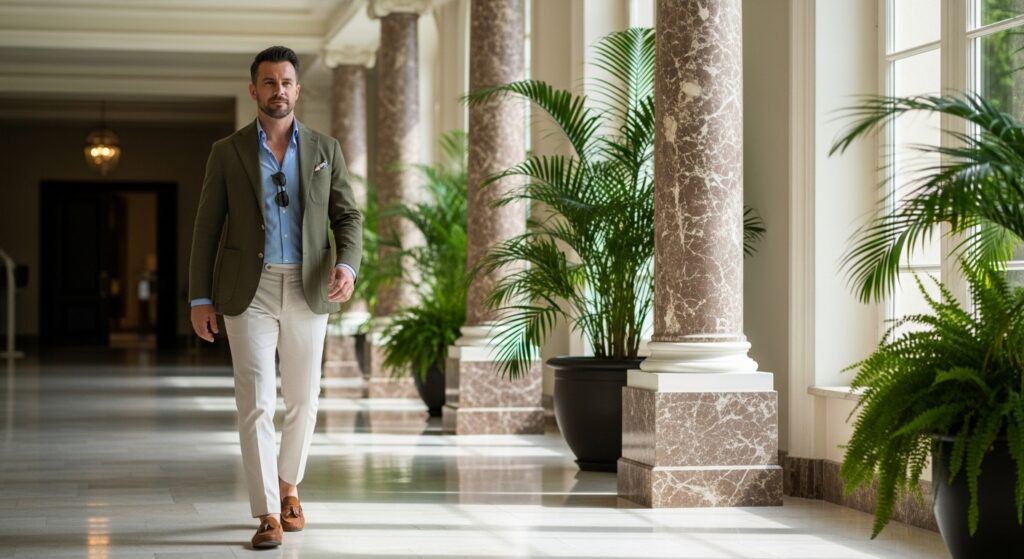
Modern workplaces are more flexible, but appearance still matters. That’s why the business casual outfit for men has become the go-to style everywhere — from startups to banks.
It’s easy, adaptable, and shows effort without trying too hard. You can go from a meeting to a coffee shop or dinner with the same outfit and still look appropriate.
When you master business casual, you don’t just dress better — you feel more confident doing your work.
Conclusion
A business casual outfit for men is about finding that sweet spot between style and comfort. With a few good shirts, chinos, loafers, and a blazer, you can create multiple looks without overthinking.
Keep your clothes clean, fit right, and match your work environment. Once you understand what works for you, dressing for success becomes second nature.
In the end, business casual isn’t just about what you wear — it’s how you carry yourself. Confidence, good posture, and a clean look are what truly make the difference.